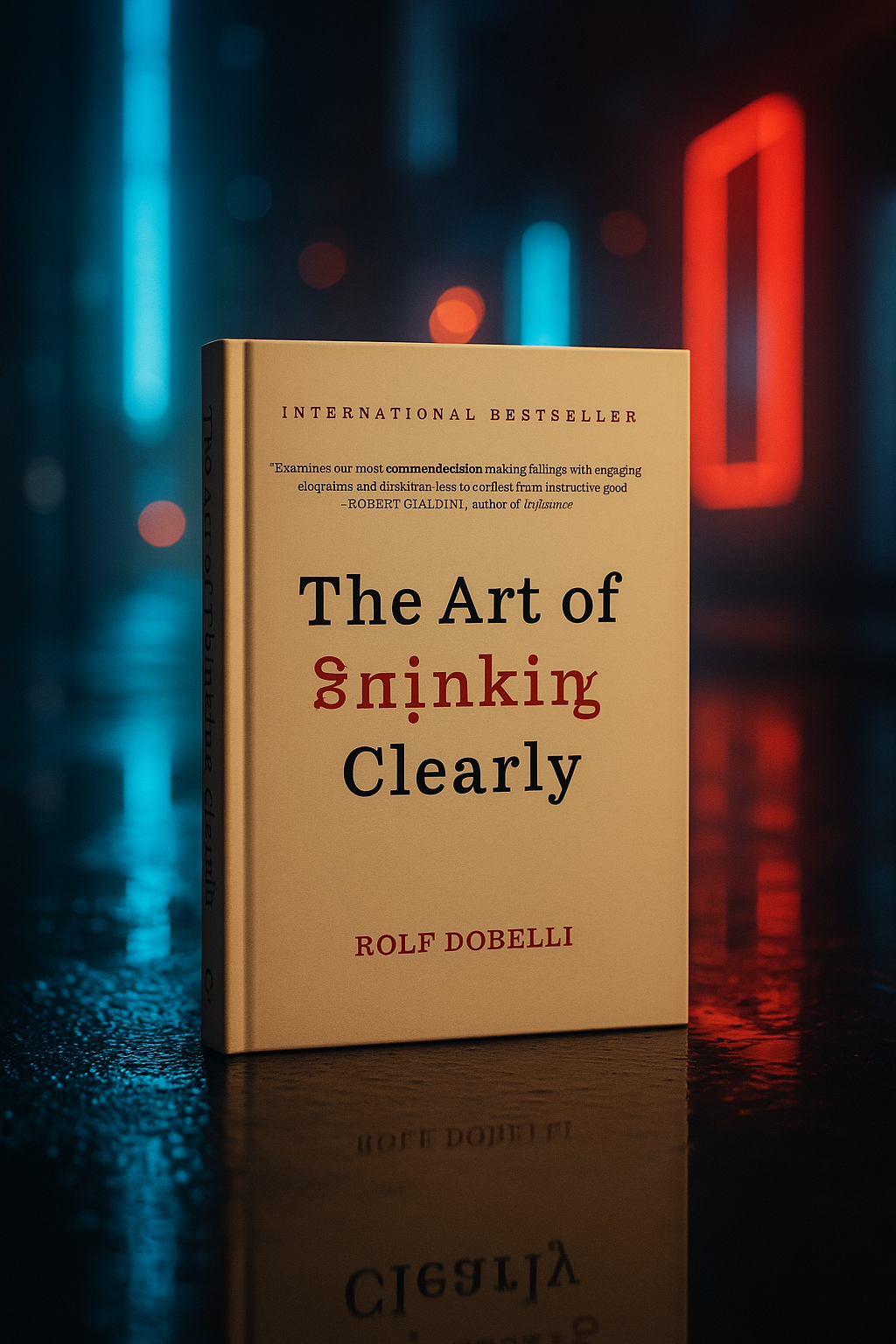
You ever make a decision and then immediately wonder, “Why did I just do that?” Yeah—same. Turns out, our brains are kind of messy, and Rolf Dobelli’s The Art of Thinking Clearly breaks down exactly why.
This book is like a cheat code for figuring out all the weird little ways your brain sabotages you—except it’s not preachy or overloaded with science-speak. It’s 99 short chapters (aka snack-sized lessons) on how we constantly fall for things like the sunk cost fallacy, social proof, and that whole “too many choices = stress spiral” thing.
And the best part? You don’t have to commit to long reading sessions. Read a chapter, scroll TikTok, come back later. It’s built for brains that multitask (and maybe overthink a little).
What really got me is how personal it felt. Every other chapter had me going, “Wait… I do that.” Like when Dobelli explained the contrast effect—I instantly thought about every time I judged someone’s vibe based on who they were standing next to. Or the winner’s curse, where you “win” something and later realize you probably overpaid (hello, concert resale tickets). Every chapter is a little mirror, and not always the flattering kind.
Also, if you’re into business, startups, or just not making garbage decisions with your time and money, this book lowkey hits. Dobelli throws in plenty of examples that make you rethink how you value effort, why you commit to bad ideas, and how being “rational” isn’t always what it seems.
Now, real talk—some chapters feel a little repetitive, and a few ideas could’ve been explained with more punch. But overall, the book is super readable, weirdly comforting, and kind of addictive. Like, you finish one page and immediately want to see what other bias you’ve been falling for since middle school.
So yeah, read it. Highlight it. Side-eye your own brain. You’ll probably never look at your decisions the same way again. And honestly? That’s kind of the point.